Getting downlight placement right can make a big difference to how comfortable and practical a room feels. Too few lights can leave dark areas, while too many can make a space feel harsh or create glare.
A useful downlight placement guide considers more than the ceiling. Room size, ceiling height, furniture layout and how each space is used should all influence where fittings are positioned.
Understanding Downlight Placement Basics
Good downlight placement is about creating an even spread of useful light, not simply forming a neat grid across the ceiling.
Ceiling height, beam angle and lumen output all affect how far light spreads and how bright a room feels. Furniture also matters. Sofas, tables, benches, shelving and other fixed features can change where light is most useful.
For this reason, downlight spacing should be planned around the room itself rather than copied from one space to another.
How to Position Downlights in a Living Room
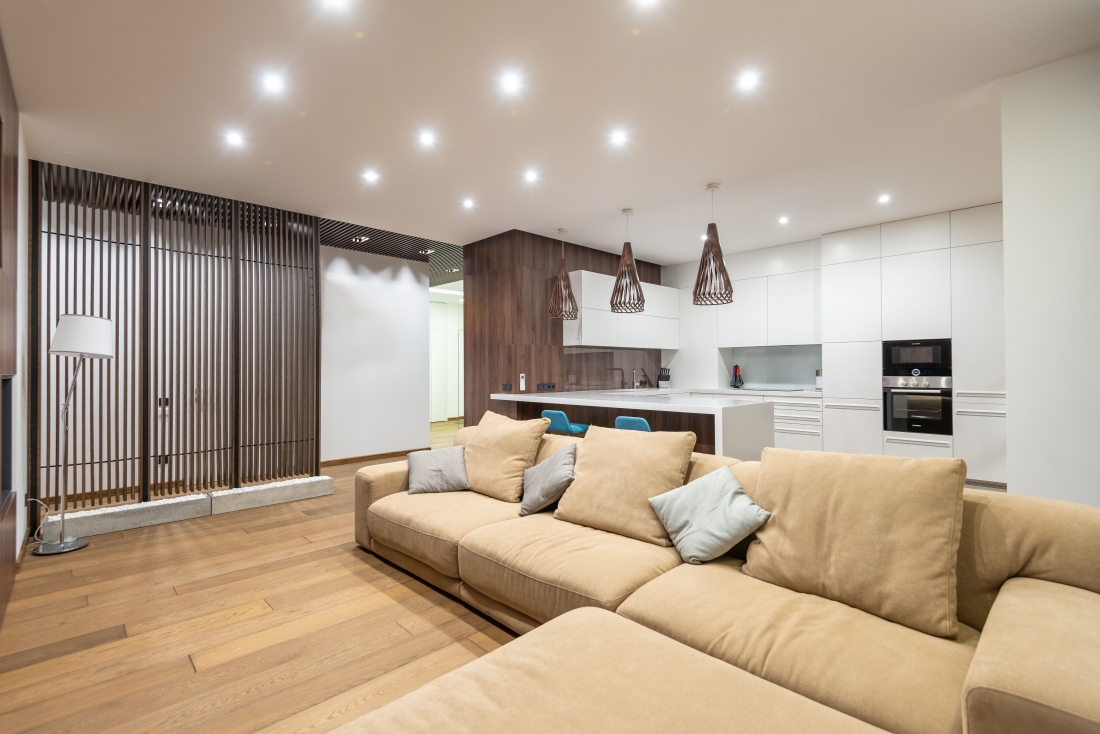
When planning downlight placement in a living room, aim for comfortable general illumination without placing bright fittings where they may create glare on televisions, reflective surfaces or directly above seating.
The position of the sofa, television and coffee table should help guide the layout. LED downlights can provide general illumination, while pendant lights, wall lights, floor lamps and table lamps can add softer layers around the room.
Dimmable LED downlights are also useful where you want brighter light for activities and a softer setting later in the evening.
Downlight Placement Around Living Room Furniture
Furniture should be part of the lighting plan from the start. Downlights positioned directly above sofas may feel harsh, while poorly placed fittings near televisions can create distracting reflections.
Instead, use downlights to support the main seating and circulation areas. Spotlights or wall lights can then highlight artwork, shelving, feature walls or architectural details.
This creates a more deliberate layout than treating the ceiling separately from the furniture below.
Planning Downlights for Kitchens
Good downlight placement in a kitchen should illuminate the areas where food is prepared, cooked and cleaned, including benchtops, islands, sinks and cooking zones.
Positioning matters because overhead cabinets, or even the person standing at the bench, can cast shadows across work surfaces if lights sit too far behind them.
LED downlights can provide general illumination, with pendant lights or spotlights added where more focused task lighting is useful.
Downlight Placement Above Kitchen Islands and Benchtops
For kitchen islands and benchtops, the priority is directing useful light onto the work surface without creating uncomfortable glare or shadows. Dimmable LED downlights can provide brighter task lighting when preparing food and softer illumination later in the evening.
Above an island, pendant lights can add another layer of practical lighting while also creating a decorative focal point.
How to Position Downlights in Hallways
Hallways benefit from consistent lighting that avoids noticeably dark sections. Consistent downlight spacing can help create a continuous spread of light along longer corridors.
When planning downlight placement in a hallway, consider doorways, entrances, artwork and feature walls rather than focusing only on the centre of the ceiling.
LED downlights can provide the main illumination, while spotlights or wall lights can highlight artwork or architectural details.
Choosing the Right Spacing Between Downlights
There is no single downlight spacing rule that suits every room. The right distance between fittings depends on ceiling height, beam angle, lumen output and the type of downlight being used.
A narrower beam concentrates light across a smaller area, while a wider beam distributes it more broadly. Ceiling height and lumen output also affect how the finished lighting feels, so these factors should be considered together rather than using one spacing measurement everywhere. Brighter fittings can also affect how many downlights are needed.
Look at the entire room, including furniture, work areas and walkways, rather than following a fixed measurement for every application.
Choosing the Right Colour Temperature for Each Room
Colour temperature changes how a room looks and feels. Warmer light generally creates a softer, more relaxed atmosphere, while neutral light gives a clean and balanced appearance. Cooler colour temperatures can create a crisper, more focused appearance, although the actual brightness of the fitting depends on its light output.
Consider the purpose of the room and its existing décor when choosing LED downlights, LED globes or dimmable LED downlights. Living areas may suit warmer tones, while kitchens and workspaces may benefit from a more neutral appearance.
Why Dimmable Downlights Are Worth Considering
Dimmable LED downlights give you more control over brightness throughout the day. A brighter setting can suit cleaning, cooking or entertaining, while lower light levels can create a softer atmosphere.
This is especially useful in living rooms and open-plan areas that serve several purposes. Dimming also works well alongside lamps and wall lights, giving you more flexibility without changing the lighting layout.
Common Downlight Placement Mistakes to Avoid
Common mistakes include installing too many lights, creating glare, ignoring furniture placement and leaving important areas poorly illuminated.
Another is relying entirely on downlights. Pendant lights, wall lights and table lamps can provide task and accent lighting that downlights alone may not deliver.
A balanced lighting plan should provide enough light where it is needed without making every part of the room equally bright.
Creating a Layered Lighting Plan
Layered lighting combines ambient, task and accent lighting to make an interior more functional and comfortable.
LED downlights can provide general illumination, while pendant lights or chandeliers can add another layer of light and create a visual feature. Wall lights can highlight particular areas, while table or floor lamps can add softer light for reading or relaxing.
Using these layers allows you to change the feel of a room depending on the activity and time of day.
Explore Modern Downlights for Perth Homes
Once you have considered the room layout, furniture, beam angle and the areas that need the most light, the next step is choosing fittings that suit that plan. If you are looking for downlights in Perth, Boardwalk Fans & Lighting stocks modern downlights and LED lighting options for living rooms, kitchens, hallways and other interior spaces.
With more than 40 years of combined interior lighting experience, the Boardwalk team can help you compare lighting options based on the room, your preferred style and the practical lighting you need.
Whether you are looking for LED downlights in Perth, dimmable LED downlights or complementary interior lighting, visit the Southern River showroom, browse online or speak with the Boardwalk team for advice.